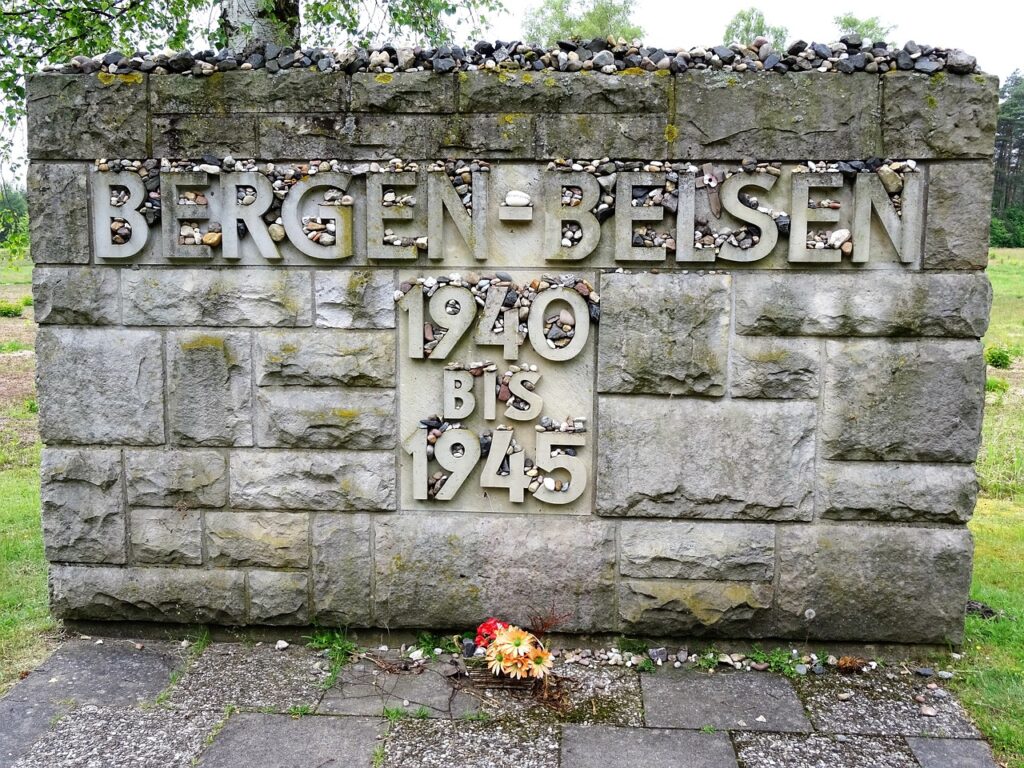
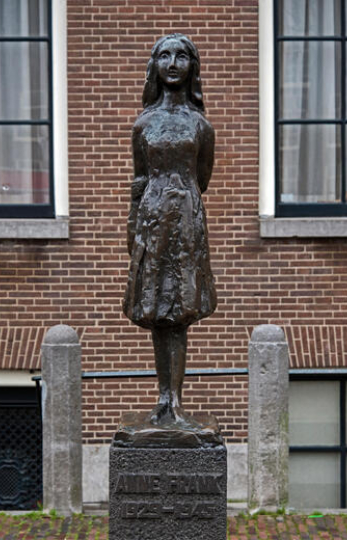
Anne Frank is the most well-known of the six million Jews who died at the hands of the Nazis. Her famous diary, which she wrote while hiding, turned this thirteen-year old girl into a symbol of the Holocaust. Several reasons may explain what David Barnouw has called “The Phenomenon of Anne Frank” (2018), among them that Anne Frank shares with us her innermost feelings and thoughts about the two and a half years that she and her family spent hiding from the Nazis in an Amsterdam attic. The diary ends rather abruptly, so that the reader does not grasp Anne Frank’s tragic fate in Bergen-Belsen, where she was deported when the Gestapo broke into the attic. The fact that it is an unfinished story makes it all the more moving.
In addition to the great documentary value of any authentic testimony, the diary’s specific value lies in the fact that the narrative is the work of a teenager and connects, therefore, with a very wide audience. Translation has, furthermore, played a crucial role in multiplying this text’s capacity to transcend cultural barriers. In fact, according to the most recent studies (Nerds 2024), the diary has been translated into more than 70 languages so far.

Apart from being in circulation in dozens of languages, Anne Frank’s testimony offers a uniquely relevant and engaging perspective on the Holocaust, which is why several educational materials have been developed to bring her life story as well as issues of hate and discrimination to the attention of students. Yet, while the story may have a universal message, it is by exploring universal themes how the diary has been rewritten and reinterpreted in a variety of ways—some of them have even made the diary’s message detached from Jewish persecution. In effect, on the basis of Anne Frank’s philosophy of life, a number of works have resorted to her story of imprisonment to emphasize the resilience of the human spirit; yet, some of these reworkings are far removed from the real experience that Anne Frank, her family and family friends encountered when they went into hiding at Prinsengracht 263.
The process of rewriting began, as has been sufficiently credited, with Anne Frank’s father, Otto Frank, who edited the manuscript to make it publishable. Many other interventions have contributed ever since to shaping Anne Frank’s image, whether through the inevitable manipulation of translation or through the even greater intervention to which adaptations lend themselves. Like translations, the number of adaptations is also large; moreover, they were available soon after the diary’s first translation into English: Albert Hackett’s and Frances Goodrich’s famous stage adaptation appeared in 1955, and George Stevens brought Anne Frank’s story to the silver screen in 1959. Considering that the authors of the HORES Catalogue have identified more than 400 Spanish-authored Holocaust works, it comes as no surprise to learn that the diary of Anne Frank, given its worldwide impact, has left its mark.
There are at least two Spanish-authored works based on Anne Frank’s diary, both of which are innovative and controversial: a musical, The Diary of Anne Frank. Un canto a la vida (Alvero 2007), and a flamenco dance performance, El encierro (Juncal 2014).
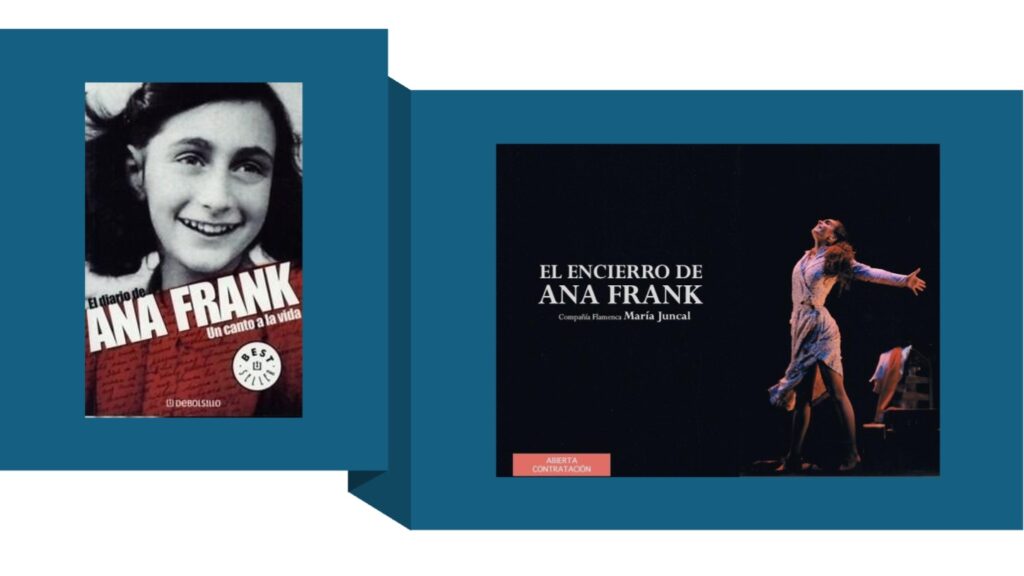
Leaving aside the artistic contribution of the works (some of the songs from the musical are available here, and there is also a promotional video of the flamenco show), I would like to reflect briefly on the way in which both representations have pushed further the story of remediation that has accompanied Het Achterhuis ever since it was first published in 1947. Both works reinforce the narrative of survival, which in turn means that both of them shift the focus away from the particularity of the Holocaust: the extermination of six million Jews at the hands of the Nazis. In the case of the musical, resilience emerges strongly in the title itself, which highlights life. As for Juncal’s proposal, the medium, a cultural intangible closely linked to the Gypsy people and thus a medium that refers not only to the memory of the Jewish people but also to the memory of the Roma and Sinti, broadens the history of imprisonment to include a group other than the one in whose name Anne Frank wrote her diary. While admitting the author’s good intentions, one should bear in mind that such an interpretation exceeds authorial intentions. In particular, such an approach is problematic because it is somewhat appropriative.
References
- Alvero, Rafael. 2008. Diario de Ana Frank. Un canto a la vida. Spain.
- Barnouw, David. 2018. The Phenomenon of Anne Frank. Indiana: Indiana UP.
- Frank, Anne. 1947. Het Achterhuis. Ámsterdam: Contact.
- Frank, Ana. 1955. Las habitaciones de atrás, trans. Isabel Iglesias Barba. Barcelona: Garbo.
- Goodrich, Frances and Albert Hackett.1955. The Diary of Anne Frank. United States.
- History Nerds. 2024. Anne Frank.
- Juncal, María. 2014. El encierro. Spain.
- Stevens, George. 1959. The Diary of a Young Girl. United States.
Related texts:
https://revistas.uma.es/index.php/trans/article/view/5027